
When the Music Stops: Common Dance Injuries

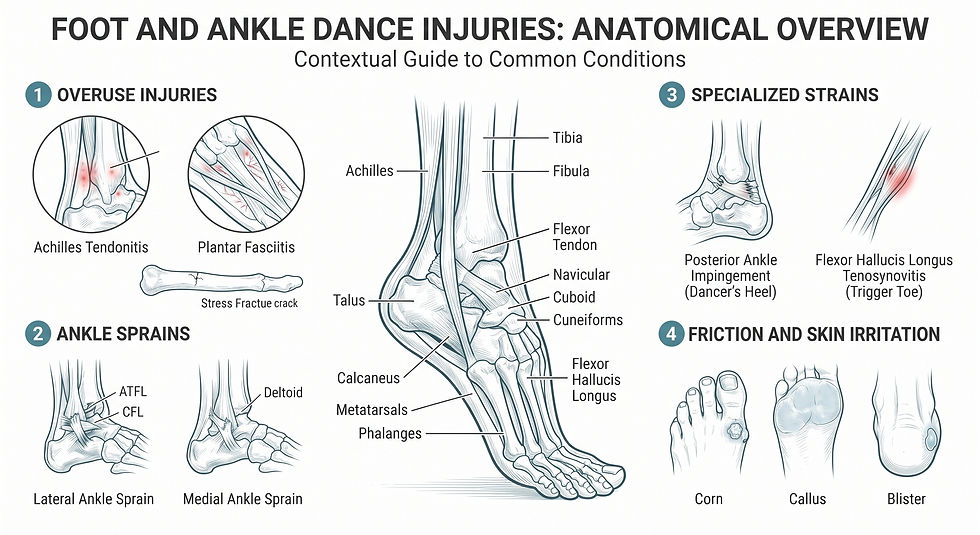
Dancers ask their feet to act as shock absorbers, stabilizers, and propulsion systems all at once, the lower extremities take a heavy toll. Some of the most common dance injuries we encounter include:
Overuse Injuries: Repeatedly jumping, landing, or pivoting can lead to conditions like tendonitis, plantar fasciitis, and stress fractures, you know those small hairline cracks in the bone.
Ankle Sprains: Quick movements, complex footwork, and awkward landings from jumps can stretch or tear the ligaments that keep your ankle stable.
Specialized Strains: Ballet dancers facing the demands of en pointe or demi-pointe positions often deal with unique challenges like posterior ankle impingement or flexor hallucis longus tenosynovitis, also known as "trigger toe".
Friction and Skin Irritation: Tight-fitting dance shoes or repetitive rubbing can also lead to painful corns, calluses, and blisters that make every step a chore.
Why You Shouldn't Dance Through the Pain
There is a common mindset in the dance and athletic community that pain is just part of the price of admission. We've all heard phrases like "no pain, no gain." But when it comes to your feet, ignoring a dull ache or hoping it will disappear overnight can turn a minor issue into a major sidelining injury.
Many people assume that if they can still walk on a foot, it isn't seriously injured. Unfortunately, that is a dangerous myth. Common injuries left untreated can worsen over time, potentially requiring more intensive intervention or surgery down the road.
Don't Let the Dance Injuries Keep You Off Your Feet
Whether you're a professional performer, a dedicated student, or someone who just loves hitting the social dance floor on the weekends, you shouldn't have to live with chronic discomfort.
Proper care starts with listening to your body. If an injury or persistent pain occurs, prompt medical attention makes all the difference. Conservative treatments, such as targeted rest, physical therapy, proper bracing, or custom orthotics to correct underlying biomechanical issues, can often resolve these problems and restore your natural stride.
Your feet carry you through every rhythm of life. With the right preventive strategies, proper footwear, and timely professional guidance from Dr. Garvin and our team, we can address the root cause of your pain and get you back to doing what you love.
If a foot or ankle injury is throwing off your rhythm, come on in to Elk Grove Foot and Ankle Clinic. Let’s get you back on your feet!
At Elk Grove Foot and Ankle Clinic we treat your feet.
Medical Disclaimer: The information provided in this post is for general informational and educational purposes only and is not intended to be a substitute for professional medical advice, diagnosis, or treatment. Always seek the advice of your physician, podiatrist, or other qualified health provider with any questions you may have regarding a medical condition.

Comments